
Meet Dr. Kerstin Nündel: Searching for the Puzzle Piece That Could Protect Sight
Long before she was studying the immune system, Kerstin Nündel was a curious kid in Freilassing, Germany, exploring nature through books and small homemade experiments.

Then, at 13, she unwrapped a microscope for Christmas, and she was hooked. Biology and chemistry simply made sense to her.
That early curiosity carried her across the Atlantic to Thomas Jefferson University in Philadelphia, where she earned her PhD, and into a career devoted to one of the body’s most remarkable systems: the immune system.
“Our immune system is a very complex, but well-working machine that keeps us healthy,” Dr. Nündel says. “Understanding all the different mechanisms by which the immune system works is like a big puzzle that I try to help solve.”
The thrill of finding a piece that fits is her favorite reward. But the real prize is taking each discovery further: understanding what goes wrong in disease, and finding treatments that will help patients in the future.
Dr. Nündel’s Shaffer Grant project focuses on a molecule called FasL, which comes in two forms. The membrane-bound form (mFasL) can trigger cell death. The soluble form (sFasL) does something very different: her team has shown it protects.
In the glaucomatous eye, sFasL is lost, and retinal ganglion cells (the nerve cells that carry vision to the brain) begin to die. Yet when her team boosted sFasL in the eye, it prevented glaucoma and even stopped the disease from progressing in their model!
With her Shaffer research, Dr. Nündel aims to understand exactly how sFasL protects the healthy eye. Her team proposes using AAV vectors, a gene-delivery tool, to restore sFasL in the eye, protect retinal ganglion cells, and prevent blindness. It’s an approach that could one day help patients not only treat glaucoma, but prevent it.
Outside the lab, Dr. Nündel treasures time with her husband, their 11-year-old daughter, and the family cat. They love hiking, concerts, museums, and travel. Their favorite tradition, though, is the weekend cookout: picking new recipes, shopping together, cooking all weekend, and sharing the feast with friends.
“I would like to express my deepest gratitude to the donors and sponsors of the Glaucoma Research Foundation,” she says. “I am humbled to receive this award and by the trust the Foundation and donors have in me to move the glaucoma field forward. Thank you so much!”
Thanks to your generosity, discoveries like hers are moving from the lab bench toward a future where glaucoma no longer steals sight.
Questions and Answers with our November 2026 Scientist of the Month: Kerstin Nündel, PhD
Where were you both?
Freilassing, Germany
Where did you get your PhD?
Thomas Jefferson University, Philadelphia, USA
What first interested you in science?
As a kid, I liked to explore nature in any way I could, by reading and doing small experiments. I was totally hooked when I got a microscope for Christmas when I was 13 years old. Also, biological concepts as well as chemistry made intuitively sense to me when taught in school. That was not always true for physics though.
What is your personal motivation as a scientist?
Our immune system is a very complex, but well working machine that keeps us healthy. Understanding all the different mechanisms by which the immune system works is like a big puzzle that I try to help solve. And it is the excitement when I find a fitting puzzle piece that is the best reward to me as a scientist. But the tip of the iceberg for me is to then take my discovery and figure out what goes wrong in different diseases and hope to be able to either find an explanation or even better find a treatment that will help patients in the future.
What is the goal of your Shaffer research project?
We are working on a molecule called FasL, which comes in 2 forms — membrane bound (mFasL) and soluble (sFasL). mFasL is involved in inducing cell death while we have shown that sFasL has protective functions. We have found that overexpression of sFasL in the eye can prevent glaucoma as well as stop progression of glaucoma. The goal of my Shaffer research project is to better understand the protective function of sFasL in the healthy and the glaucomatous eye to design new therapies to prevent and treat glaucoma.
How could your Shaffer research impact glaucoma patients?
A better understanding of the protective function of sFasL will let us design new therapies that take advantage of this protective function or restore the natural expression of sFasL. sFasL expression is lost in the glaucomatous eye, which leads to loss of retinal ganglion cells. We are proposing to use AAV-vectors that encode sFasL to restore expression of this molecule in eye and prevent the loss of retinal ganglion cells and blindness.
When you’re not in the lab, what do you do for fun?
I love to spend time with my family — my husband, my 11-year old daughter and our cat. We love to explore nature, go hiking, go to concerts and museums. We also like to travel. But what we enjoy most is cooking together. We sometimes plan weekend cookouts where we pick new recipes, go shopping together and cook the whole weekend and then share all the good food with our friends.
What else would you like the readers to know about you?
I would like to express my deepest gratitude to the donors and sponsors of the Glaucoma Research Foundation. I am humbled to receive this award and by the trust the Foundation and donors have in me to move the glaucoma field forward. Thank you so much!
Posted on November 5, 2026. Article by Cynthia Steel, PhD, MBA.
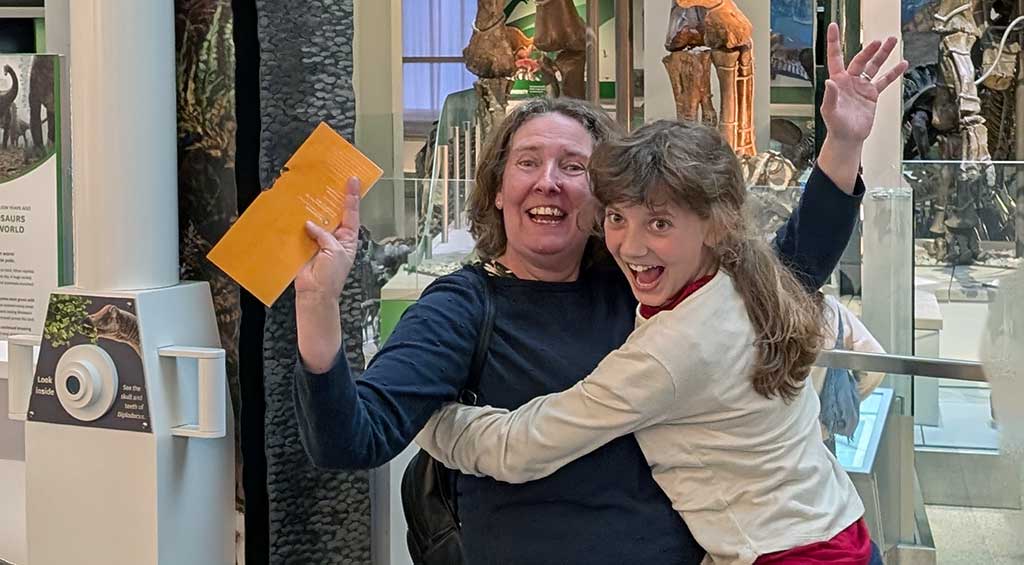
Pictured above: Kerstin Nundel and her daughter at the Smithsonian Natural History Museum in Washington, D.C.
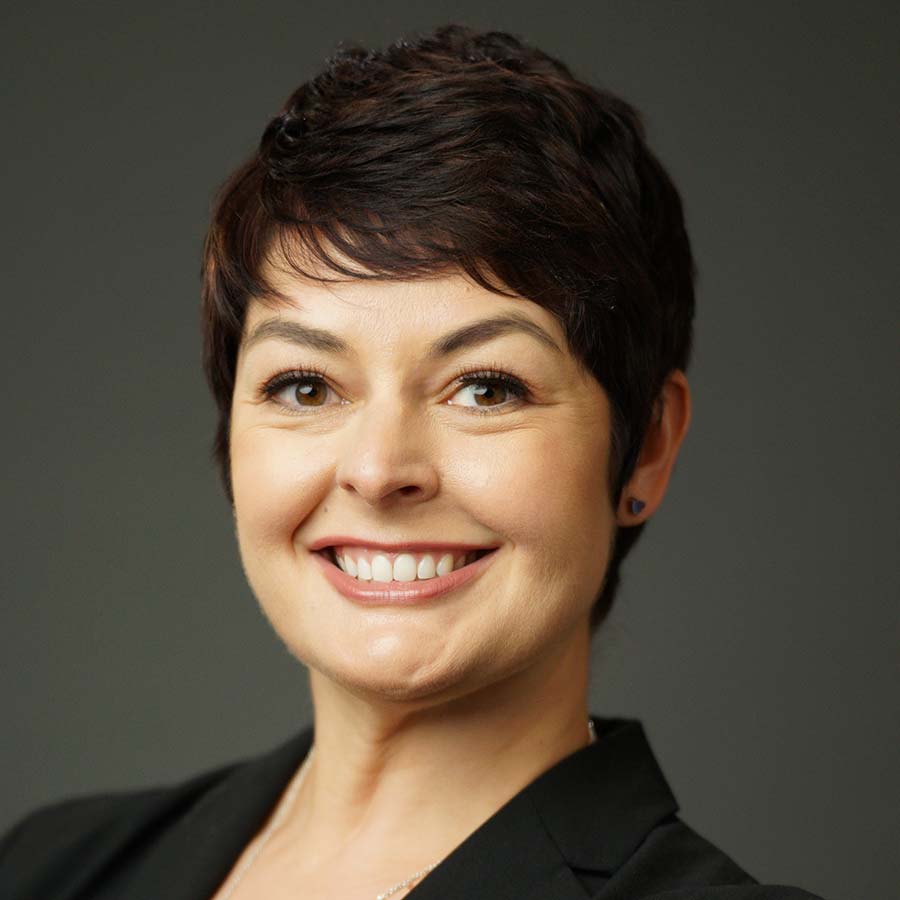
Cynthia Steel, PhD
Cynthia Steel, PhD is the Chief Scientific Officer for Glaucoma Research Foundation. Her work is grounded in a commitment to improving patient outcomes and translating cutting-edge science into meaningful clinical applications.