Behind the Breakthroughs: How Dr. Maria Fernanda Suarez Could Transform Laser Therapy
Maria Fernanda Suarez steps into the laboratory every day knowing that her work could spare someone from losing their vision.

Every breakthrough in vision research begins with a spark of pure curiosity—and for Dr. Maria Fernanda Suarez, that spark was ignited in the small town of La Tordilla in Córdoba, Argentina. As a child, Dr. Suarez was endlessly captivated by the natural world, spending hours reading about how living systems connect. That innate wonder grew into a lifelong mission: earning her PhD at the Universidad Nacional de Córdoba and dedicating her career to turning biological questions into life-changing answers. Today, thanks to the vision and generosity of GRF donors, Dr. Suarez is bringing that passion to the frontlines of sight-saving science.
At the heart of Dr. Suarez’s work is a powerful, patient-first motivation. She is driven to untangle the complex molecular and cellular mechanisms of glaucoma so that laboratory discoveries can directly protect human sight. Every single day, she steps into the lab knowing that her work could spare someone from losing their vision. That commitment is fueled by the love of her family back in Argentina, along with her favorite home support team: her husband, Luciano, and their dog, Sophie.
With funding from her Shaffer Grant, Dr. Suarez is tackling a crucial puzzle in glaucoma care. Her team is developing a groundbreaking model for Selective Laser Trabeculoplasty (SLT)—a primary treatment used to lower intraocular pressure. By pioneering a non-contact laser technique, Dr. Suarez and her mentor, Dr. Katy Liu at Duke University, are closely mirroring the exact procedure patients receive in the clinic. This vital model will give researchers never-before-seen insight into how SLT actually works under the microscope, opening the door to safer, more precise, and far more effective laser therapies that can preserve sight for years to come.
When she steps away from the microscope, Dr. Suarez keeps her creative energy flowing. You can often find her recharging in nature, hiking through forest trails with Luciano and Sophie, or tackling a completely different kind of challenge: learning to play the flute. Her holistic approach to life and learning mirrors the heart of the GRF community, where passion, dedication, and generous donor support join forces to change the future of glaucoma care.
Questions and Answers with our September 2026 Scientist of the Month: Maria Fernanda Suarez
Where were you born? La Tordilla, a small town in the province of Cordoba in Argentina
Where did you get your PhD? Universidad Nacional de Cordoba, Cordoba, Argentina
What first interested you in science? I don’t remember a single moment when I became interested in science, but as a child I loved reading and watching anything about nature. I was fascinated by how everything in the natural world was connected, and that curiosity made me want to understand how things work. Over time, that curiosity grew into a desire to work in a lab and be part of discovery myself.
What is your personal motivation as a scientist? My motivation as a scientist comes from wanting to understand the molecular and cellular mechanisms underlying glaucoma and to do work that truly matters for patients. Knowing that this research can help protect people’s vision is what keeps me focused and moving forward. I carry that motivation with me every day, supported by my husband (Luciano) and dog (Sophie) at home, and by my family far away in Argentina, whose love and encouragement continue to inspire me
What is the goal of your Shaffer research project? The goal of our project is to develop and validate a mouse model for Selective Laser Trabeculoplasty (SLT), a first-line treatment for lowering intraocular pressure (IOP) in glaucoma patients. We aim to create a model using a non-contact laser approach that delivers the treatment through the sclera, closely replicating the clinical procedure.
How could your Shaffer research impact glaucoma patients? By providing a better understanding of how SLT lowers intraocular pressure, this model could help identify new therapeutic targets and improve glaucoma treatments. It may lead to safer, more effective laser therapies, ultimately helping patients preserve their vision and quality of life.
When you’re not in the lab, what do you do for fun? When I’m not in the lab, I love exploring the outdoors with my husband and our dog—hiking through forests, breathing in fresh air, and just being in nature. I also enjoy learning to play the flute, which challenges me in a completely different way and gives me a creative outlet outside of science.
Posted on September 9, 2026. Article by Cynthia Steel, PhD, MBA.
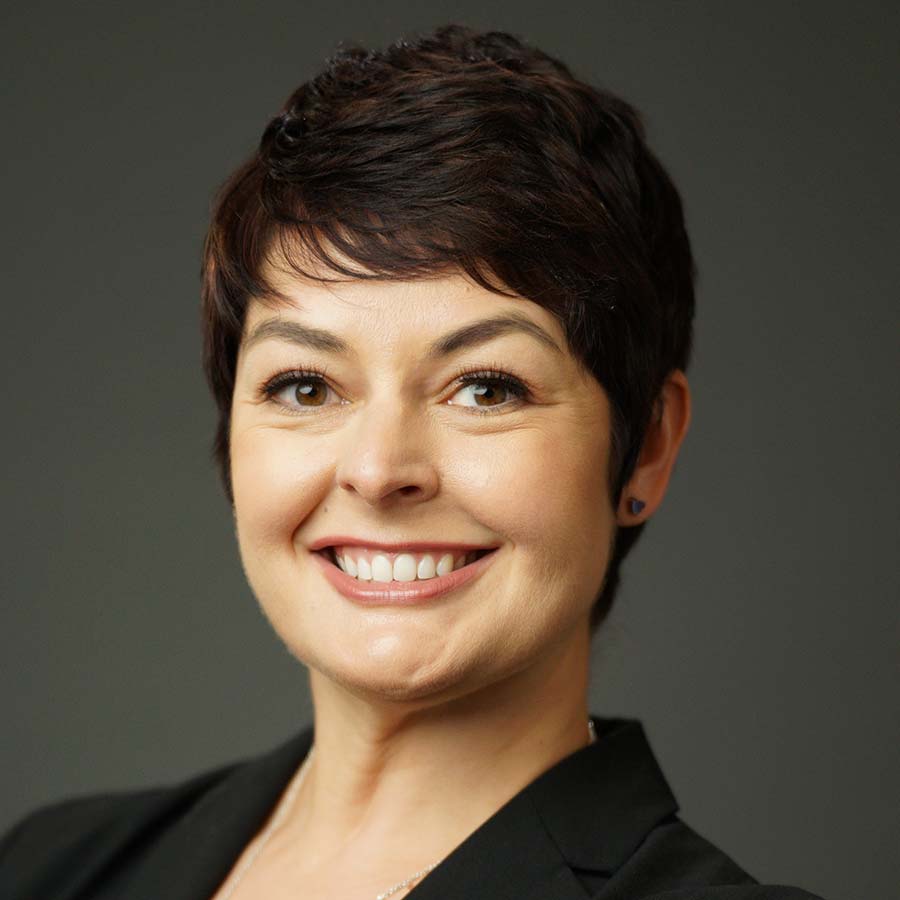
Cynthia Steel, PhD
Cynthia Steel, PhD is the Chief Scientific Officer for Glaucoma Research Foundation. Her work is grounded in a commitment to improving patient outcomes and translating cutting-edge science into meaningful clinical applications.