Glaucoma Research Foundation Announces Record $3.06 million in Annual Research Grants to Fund their 2026 Shaffer Grants and Catalyst for a Cure Research Collaborations
March 9, 2026, San Francisco, CA — Glaucoma Research Foundation (GRF) today announced a record total $3.06 million in annual research grants to support innovative research to find cures for glaucoma and neurodegeneration, and to continue funding research for vision restoration. The grants are being awarded to twenty investigators at prominent medical institutions across the United States.
“This year’s historic level of research funding reflects the extraordinary commitment of our donor community, many of whom are patients and families personally affected by glaucoma,” said President and CEO, Thomas Brunner. “Their generosity allows us to support bold scientific ideas and accelerate discoveries that will lead to better treatments, vision restoration, and ultimately a future free from glaucoma.”
Glaucoma Research Foundation is awarding one-year, $55,000 Shaffer Grants to twelve scientists to support research into gene therapies, anti-inflammatory strategies, new biomarkers, neuroprotective therapies, and other novel treatments for glaucoma. GRF is awarding $1 million to the Catalyst for a Cure Vision Restoration Initiative (CFC3) principal investigators—$250,000 to each laboratory—to continue their research toward restoring vision in glaucoma, and $1 million to the Melza M. and Frank Theodore Barr Foundation Catalyst for a Cure Initiative to Prevent and Cure Neurodegeneration (CFC4), $250,000 to each laboratory. In addition, $400,00 in funding is being directed to GRF’s new Treatment Accelerator Initiative, a program designed to bridge the critical gap between scientific discovery and real-world treatments.
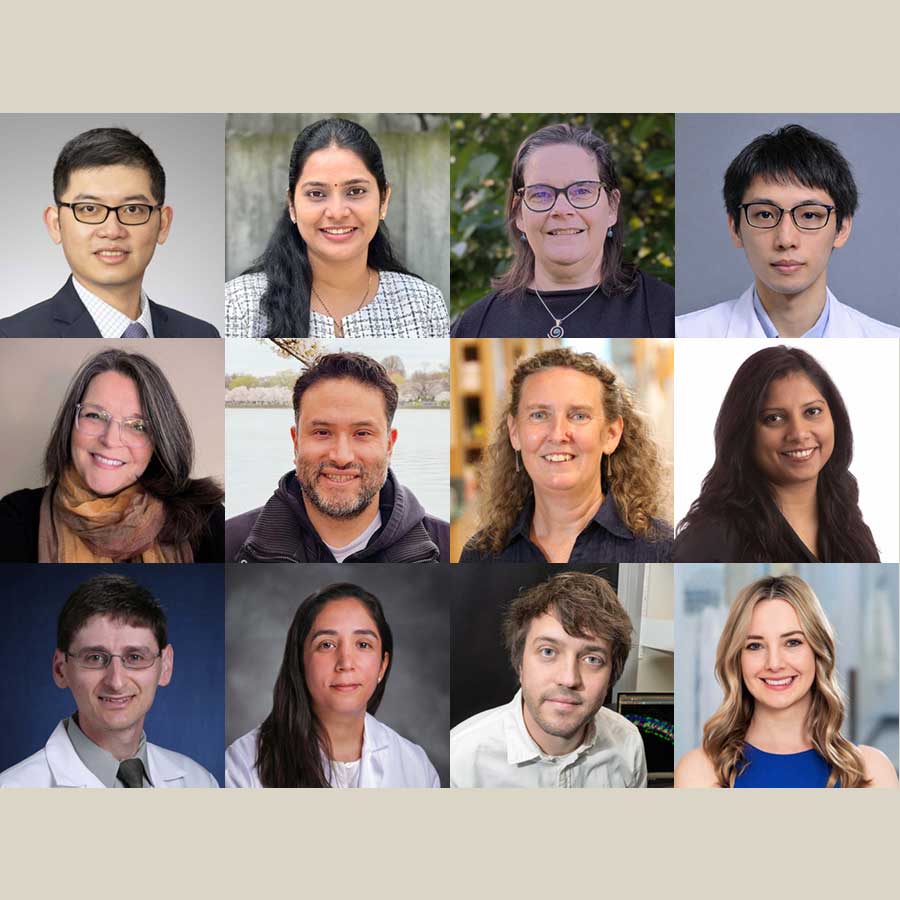
The 2026 Shaffer Grants for Innovative Glaucoma Research
The Shaffer Research Grants, at $55,000 each, are supported by GRF’s generous donors including the Arlene Anthony Grant for Innovative Glaucoma Research, Bob and Birdie Feldman, the Larry Haimovitch Grant for Innovation in Ophthalmology, Elizabeth Kinstler, the Rajen Savjani Fund for Innovative Glaucoma Research, the Frank Stein and Paul S. May Grants for Innovative Glaucoma Research, Tania Stepanian, the Dr. Henry A. Sutro Family Grant for Research, Charlie and Cathy Wilmoth, and the Zander Family Research Fund for Glaucoma Genetics. The 2026 Shaffer Grants were awarded to:
Kun-Che Chang, PhD
University of Pittsburgh
Project: Neurofilament Protein as a Regulator of Retinal Ganglion Cell Survival and Axon Regeneration in Glaucoma
Shruthi Karnam, PhD
University of California, Berkeley
Project: Targeting Lipoxin B4 for Reversing Astrocyte-Mediated Neuroinflammation in Glaucoma
Kate Keller, PhD
Oregon Health & Science University
Project: Profiling the Glaucoma Trabecular Cell Transcriptome
Naoki Kiyota, MD, PhD
Northwestern University Feinberg School of Medicine
Project: Immune–Vascular Crosstalk in the Aging Outflow Pathway
Gillian J. McLellan, PhD
University of Wisconsin-Madison
Project: Mouse Models to Study LTBP2 in Trabecular Meshwork
Kiyoharu J. Miyagishima, PhD
National Institutes of Health
Project: Hibernation-Inspired Mechanisms of RGC Survival in Glaucoma
Kerstin Nundel, PhD
UMass Chan Medical School
Project: Mechanism of Soluble FasL-Induced Neuroprotection in Glaucoma
Shruti Patil, PhD
Indiana University School of Medicine
Project: A Human iPSC-Derived Model of Hydrogel Stiffness-Induced Microglial Activation and Retinal Ganglion Cell Neurodegeneration
Lev Prasov, MD, PhD
University of Michigan
Project: Characterization of a Novel Normal Tension Glaucoma Gene
Maria Fernanda Suarez, PhD
Duke University
Project: Development of a Mouse Model to Investigate the Mechanisms of IOP Lowering by Selective Laser Trabeculoplasty
Levi Todd, PhD
SUNY Upstate Medical University
Project: Regenerating Retinal Ganglion Cells In Vivo from Muller Glia
Lauren K. Wareham, PhD
Vanderbilt University Medical Center
Project: Stabilizing Elastin to Prevent Axon Degeneration in Glaucoma
Catalyst for a Cure Research Initiatives
The four principal investigators in the Catalyst for a Cure Vision Restoration Initiative (CFC3) are Xin Duan, PhD, University of California, San Francisco; Yang Hu, MD, PhD, Stanford University School of Medicine; Anna La Torre, PhD, University of California, Davis; and Derek Welsbie, MD, PhD, Shiley Eye Institute at UC San Diego. The CFC3 team’s overall research goals are to preserve, repair, and rebuild the optic nerve where damage has already resulted in vision loss.
The four principal investigators in the Melza M. and Frank Theodore Barr Catalyst for a Cure Initiative to Prevent and Cure Neurodegeneration (CFC4) are Sandro Da Mesquita, PhD, Mayo Clinic; Milica Margeta, MD, PhD, Mass Eye and Ear; Karthik Shekhar, PhD, University of California, Berkeley; and Humsa Venkatesh, PhD, Harvard/Brigham and Women’s Hospital. The CFC4 team’s overall research goals are to explore similarities and differences among glaucoma and other conditions that stem from the death of neurons in the eye, brain, or spinal cord, in search of potential preventive measures and cures for all neurodegenerative diseases.
About Glaucoma Research Foundation
Founded in San Francisco in 1978, Glaucoma Research Foundation (GRF) is America’s oldest and most experienced institution dedicated solely to its mission: to cure glaucoma and restore vision through innovative research. GRF has a proven track record of ground-breaking, results-oriented research and produces definitive educational materials used by eye care professionals across the country. The Glaucoma Research Foundation website, www.glaucoma.org, provides valuable information about glaucoma to millions of visitors annually.
Pictured above: Recipients of the 2026 Shaffer Grants for Innovative Glaucoma Research